
-
Air Expanding Shaft | XW Machinery China Factory Manufacturer & OEM Supplier
Regular price $119.00Regular price -
Lug Type Air Shaft | Pneumatic Air Expanding Shaft for Slitting & Rewinding Machines
Regular price $149.00Regular price -
XW® Custom 74mm Manual Air Shaft for Slitting & Rewinding
Regular price $99.00Regular price -
Strip Type Inflatable Air Shaft for Winding and Unwinding Applications
Regular price $149.00Regular price -
Pneumatic Shaft | XW Machinery China Factory Manufacturer & OEM Supplier
Regular price $149.00Regular price -
Leaf Type Air Shaft for Slitting, Rewinding & Converting Machines
Regular price $199.00Regular price

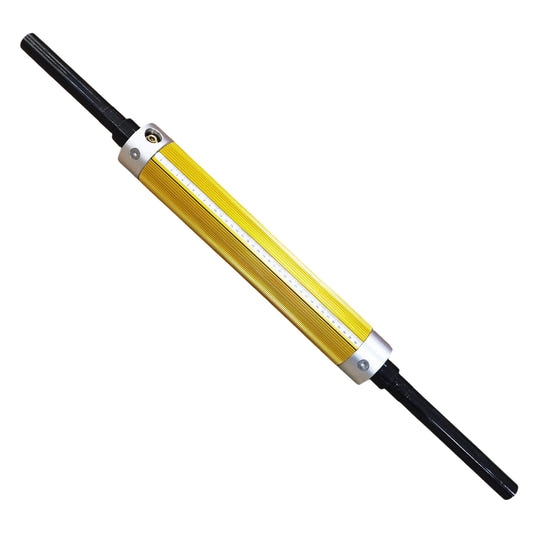

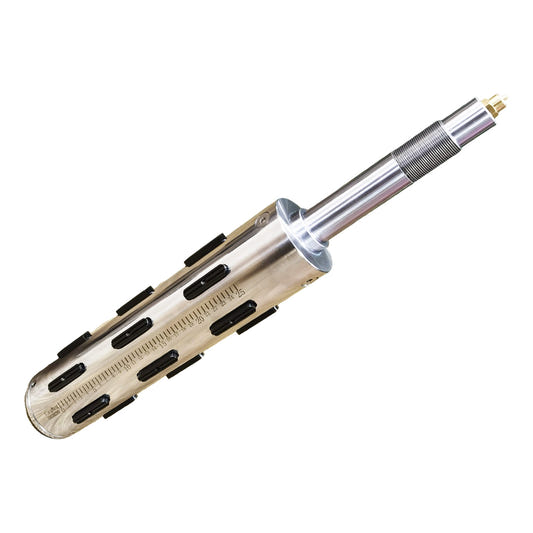

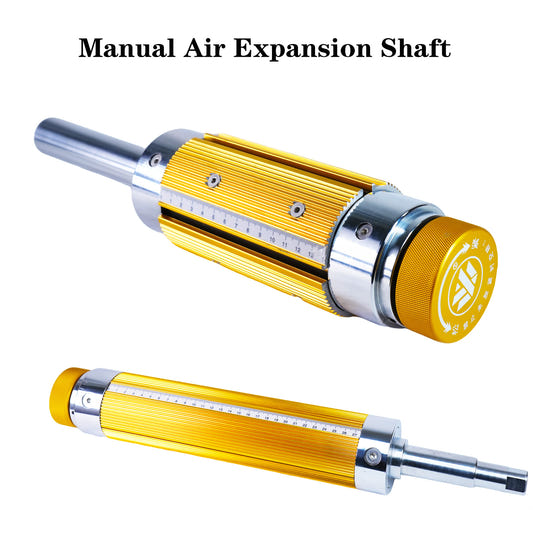

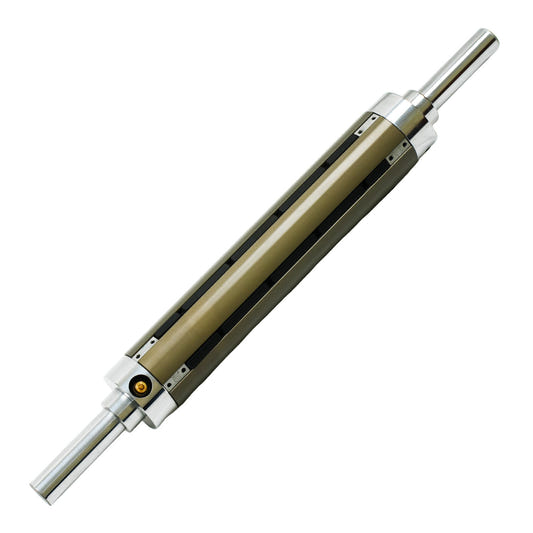

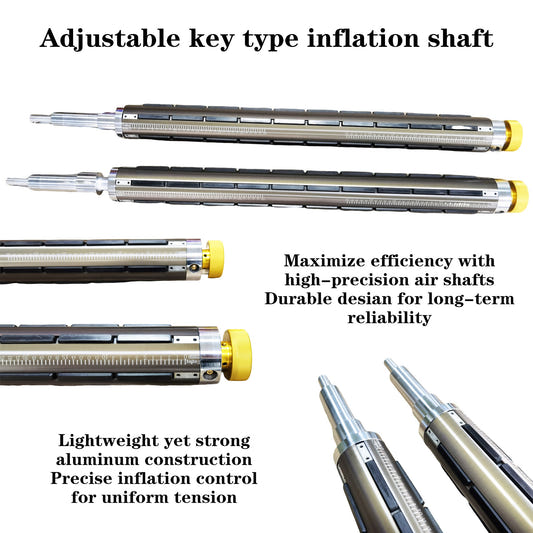

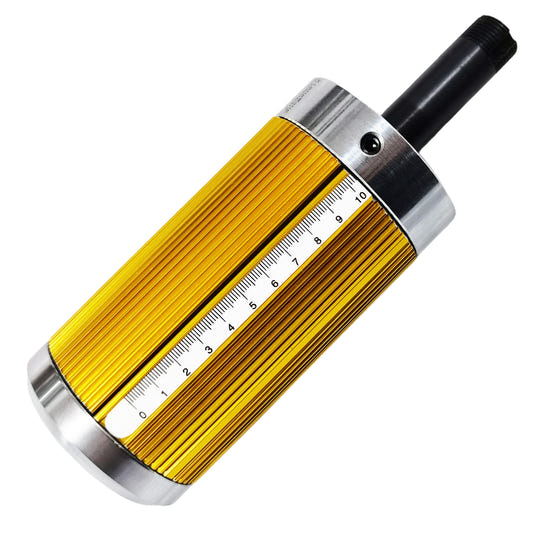
Air Shaft Selection: 3 Inch vs 6 Inch
An air expanding shaft grips the core from the inside with air pressure and releases it in seconds at the end of a run. Use the table below to shortlist the 3 inch or 6 inch build, then send your core ID, roll weight and working width so our engineers can confirm the design before production.
| Parameter | 3 inch air shaft | 6 inch air shaft |
|---|---|---|
| Core inner diameter | 3 in (76.2 mm) | 6 in (152.4 mm) |
| Shaft body diameter | 74 mm class, confirm to drawing | 150 mm class, confirm to drawing |
| Expansion type | Leaf, lug or strip type | Leaf, lug or strip type |
| Body material | Aluminium alloy or steel | High-strength steel or aluminium alloy |
| Surface treatment | Chrome plating or anodizing | Chrome plating or anodizing |
| Typical duty | Light to medium rolls, thin-wall cores | Heavy rolls, high torque winding |
| Shaft length | Customized, measured between machine frames | Customized, measured between machine frames |
| Pressure, torque and journals | Specified per application | Specified per application |
Body diameter, journal dimensions, shaft ends, rated inflation pressure and torque capacity are specified per application. The values above are typical starting points and are confirmed against your drawing or machine data.
About Air Expanding Shafts for Slitting, Rewinding & Converting
An air expanding shaft grips the inside of a paper, film or foil core with air pressure, then releases it in seconds at the end of a run. In day-to-day plant language the same component is written several ways: expanding air shaft, expanding shaft, pneumatic shaft, inflatable shaft, and — on slitting and rewinding lines — slitter shaft. All of them describe the same working principle, and XW Machinery manufactures all of them.
Because the shaft expands from inside the core, it holds without crushing and without the mechanical damage that a mechanical chuck or a tapered cone can cause. That is why an air shaft is the default core-holding method on slitting machines, rewinding machines, printing presses, coating and laminating lines, and roll-to-roll lithium battery equipment.
Air Shaft Types We Manufacture
The right type depends on your core, your roll weight and how much torque you need to transmit. This is the range we build:
| Type | Expansion element | Best for | Core sizes | Body material |
|---|---|---|---|---|
| Leaf type (leaf / slat type) | Continuous leaves along the shaft length | Light and thin-wall cores, uniform grip across the full width | 3 in, 6 in and custom | Aluminium alloy or steel |
| Lug type | Discrete expanding lugs | Heavy-duty winding, high torque transmission | 1 in, 2 in, 3 in, 6 in and custom | High-strength steel |
| Strip type | Full-length expanding strips | Large contact area, stable roll at high speed | Multiple diameters and custom | High-strength steel |
| Manual (mechanical) | Manual expansion, no air supply needed | Stations without compressed air, low-speed unwind | 74 mm and custom | Aluminium alloy or steel |
Rated inflation pressure, torque capacity, journal dimensions and shaft-end configuration are specified per application. Send us your drawing or your machine data and our engineers will confirm the build before production. Start with the customer requirements survey, or go straight to a custom air shaft enquiry.
How to Select the Right Air Expanding Shaft
Six inputs decide almost every air shaft specification. Have these ready and the selection is quick:
- Core inner diameter and core material — paper, plastic or fibre cores expand differently and change the grip you need.
- Roll weight and required torque — this is what separates a leaf type shaft from a lug type shaft on heavy rewinding.
- Working width and shaft length — measured between the machine frames, not overall.
- Journal and mounting ends — matched to your safety chuck or bearing housings.
- Operating speed — above the mid-speed range, balance and concentricity start to drive the design.
- Air supply — if the station has no compressed air, a manual expanding shaft is the practical answer.
For a step-by-step walkthrough of these decisions, read How to Choose an Air Expanding Shaft for Your Machine. If you are weighing an air shaft against a differential shaft for multi-roll rewinding, see Air Shaft vs Differential Shaft.
Applications
Our air shafts run on slitting and rewinding machines, printing equipment, flexible packaging lines, paper converting machinery, film and foil processing, laminating and coating systems, textile and nonwoven lines, label production, and lithium battery electrode roll-to-roll equipment. If a core is being wound or unwound on your line, one of the four types above will cover it.
Maintenance and Service Life
Most air shaft failures are consumable wear, not shaft failure: a leaking bladder, a tired valve core, or glazed gripping elements. All three are replaceable on the bench. How to Repair an Air Expanding Shaft covers the full procedure, and When Should You Replace an Air Expanding Shaft helps you decide when repair stops making sense.
Frequently Asked Questions
Is an air expanding shaft the same as an air shaft?
Yes. Air shaft, air expanding shaft, expanding air shaft, pneumatic shaft and inflatable shaft all refer to the same device — a shaft that expands by air pressure to grip a core from the inside. The naming varies by region and by machine builder, not by function.
What is a slitter shaft?
On slitting and rewinding machines, the shaft carrying the finished slit rolls is often called a slitter shaft. In most cases it is an air expanding shaft; where the line needs independent tension on every roll, it is a differential shaft instead.
Leaf type or lug type — which should I choose?
Choose leaf type for light or thin-wall cores where you need even grip across the full width. Choose lug type when you are transmitting high torque on heavy rolls, because the discrete lugs bite harder into the core. If your cores vary a lot between jobs, tell us the range and we will size the shaft across it.
Can you build air shafts to our drawing or OEM specification?
Yes. We build to customer drawings and to OEM specifications, including non-standard diameters, lengths, journals and shaft ends. Custom air shaft manufacturing covers the full process.
What information do you need to quote an air shaft?
Core inner diameter, roll weight, working width, machine speed, journal or chuck type, and the air supply available at the station. That is enough for us to confirm a type and quote. Use the customer requirements survey if you would rather send it structured.